-
Bert helps out with the decorating but …..

Trove reproduction quality is poor here, so I have reproduced what appears to be a fairly innocuous story in Wednesday’s April 11 1900, Page 2 of the Bendigo Advertiser.
DECORATIONS. –
For the past four months ‘Claremont’, Queen-street, the residence of Mr. S. White, has been in the hands of the decorator and they have successfully carried out an exceptionally fine piece of work. The drawing-room is carried out in Louis XIV style, in terms of blue and green. The ceiling ornamented with cupids and flowers.The freeze is of apple-blossom, while four panels of the four seasons over the walls. The dining-room is in rich shade of terracotta and green, with figure and landscape work on the walls. The hall is undoubtedly a fine piece of work. The ceiling is richly panelled, and the frescos consists of adapted vine and grapes. It is entirely hand painted. The walls are shaded from dark olive green to pale sea foam. The dado is formed of chrysanthemums of all colors and shades and is indeed charming. Gold leaf has a prominent place in enriching all and has been freely used. The door, panels are studies in themselves, almost every kind of flower lending their beauty throughout the hall. The front bedroom is beautifully decorated in pink and pale green with flower and scroll ornament, while the frieze is remarkably effective consisting of lilac and swallows. The second bedroom is in fawn and pale blue, and the ceiling is unique as is also the landscape frieze. The work, which has given Mr. White great satisfaction, has been carried out by Messrs. Coulter and Smith, of Mitchell street, who have indeed set a high standard for future work’.
—————————————————————–
Now those decorations to Mr Solomon White’s house all sound very lovely, however on the following day Thursday April 12, two strident letters to the editor of the Bendigo Advertiser are published. And yes, Solomon White is the father of Hyman White who has married Bert Levy’s sister-in-law, Victoria.

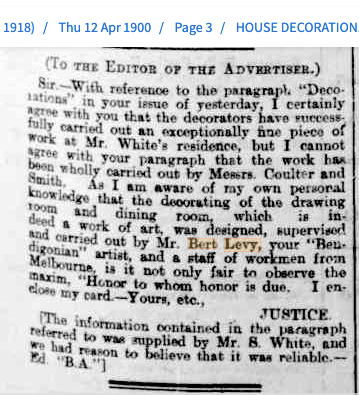
The Advertiser responds to the criticism above, claiming the information came from the house owner, Mr S White.
Whatever, the dispute was between Bert and his brother-in-law’s father, strangely the Bendigo Advertiser thought they might correct matters 8 years later when Solomon White dies in Melbourne in 1908.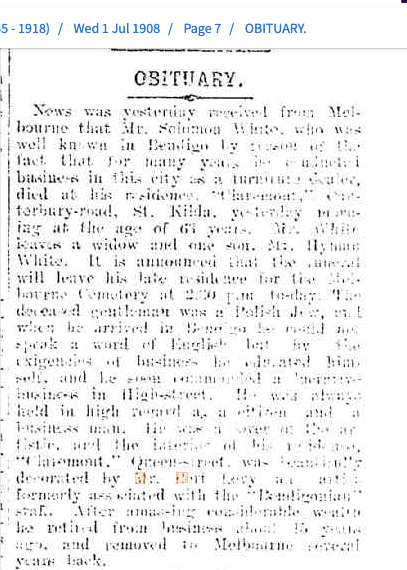
It’s unfortunately again a poor quality Trove image… but here’s the transcript below. I wonder if Bert living in the United States in July 1908 ever saw it ? ‘News was received yesterday from Melbourne that Mr. Solomon White, who was well known in Bendigo by reason of the fact that for many years he conducted business in this city as a furniture dealer, died at his residence, “Claremont,” Canterbury road, St. Kilda, yesterday morning at the age of 67 years. Mr White leaves a widow and one son, Mr. Hyman White. The deceased gentleman was a Polish Jew, and when he arrived in Bendigo he could not speak a word of English, but by the exigencies of business, he educated himself, and he soon commanded a lucrative business in High-street. He was always held in high regard as a citizen and a businessman. He was a lover of the artistic, and the interior of his residence,”Claremont,” Queen-street, was beautifully decorated by Mr. Bert. Levy, an artist formerly associated with the “Bendigonian” staff. After amassing considerable wealth he retired from business about 15 years ago and removed to Melbourne several years back.’
Postscript – I made contact with the Bendigo Regional Archives Centre to enquire whether they were able to tell me the actual number of ‘Claremont’ in Queen Street. BENDIGO REGIONAL ARCHIVES CENTRE
I received this prompt response on Claremont – ‘It appears this property was located at 107 Queen Street (Crown Allotment 8 Section 52C) and was demolished or converted into flats pre-1965. The current Bendigo Twin Cinemas stands where Claremont was located’.
My thanks for this excellence assistance to BRAC Archives Officer -Desiree Pettit-Keating.
Initially dismayed that another beautiful home such as Claremont could be demolished or converted to flats and then later become a Cinema. Desiree from BRAC did point out the wonderful irony ‘that given Bert’s successful career on stage and in film the space was now occupied by a movie theatre’.
After some further exchanges, Desiree was even able to provide the 1934 Auction notice from their microfilm sources – ‘Lo and behold’ Bert’s artistic efforts in 1900 are even acknowledged in the auction notice. Obviously Bert’s art work was still a key feature 34 years later and look at the scale of the house !
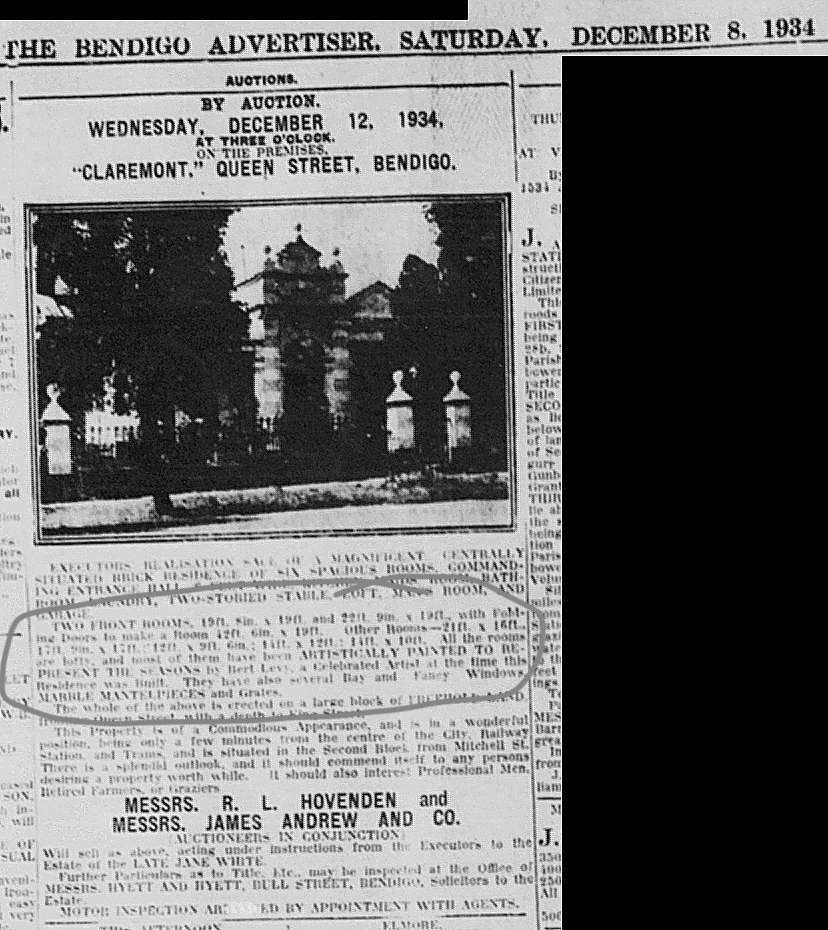
the marked up transcript reads… ‘all the rooms are lofty, and most of them have been ARTISTICALLY PAINTED TO REPRESENT THE SEASONS by Bert Levy a Celebrated Artist at the time this residence was built’
Postscript – Bert Levy died in the July of 1934, 5 months before this auction.
-
Why Bendigo ?
Prior posts have touched on why Bert may have needed to leave Sydney at the turn of the 20th Century. But why did he come to Bendigo ? It has taken a while to establish a link between Bert and Bendigo, however without being completely definitive that this was the reason, I have only recently discovered he had family in Bendigo.
I thought at first he may have been related to Montaque Levy at the Shamrock who was the Proprietor at the turn of the century. However, a Levy family member (Phil Lipshut) has informed they were not related. Montague Levy was responsible for the 1897 major addition of 2 extra stories and hot and cold running water in the bathrooms. (a rarity for the time) Here’s a postcard advert for this grand establishment, one of the finest in the country.

Now, Bert’s family connection in Bendigo.
Bert’s wife Harriet, younger sister Victoria had married a Bendigo lad, one Hyman White of Queen Street. See below the joyous wedding plans.

Melbourne Jewish Herald March 5, 1897. Interesting they had a Bendigo correspondent then. Not only is the future G.G referenced here, Issac Issacs,(great name) there are some very well known Jewish residents of Bendigo mentioned in this report. A year after their marriage, Victoria and Harriet’s recently widowed mother comes to stay in Queen Street with Hyman and Victoria. Tragically, the mother dies in Bendigo after a fall at their residence.

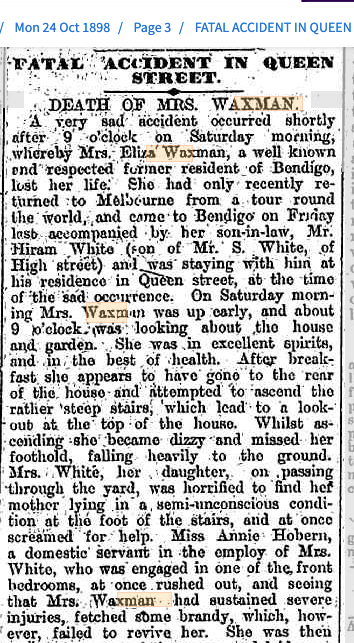
Bendigo Independent. If you would like to read all the treatment details after a brandy, the whole article, is available on this link.
https://trove.nla.gov.au/newspaper/article/177585465?searchTerm=WaxmanInteresting Bert’s brother in law, Hyman White is not only a Furniture salesman in his father’s store, he also gets into Theatre management in 1901 and opens a new type of theatre in the Masonic Hall on View Street. The Bendigo Independent Supplement has a new editor (Bert) in January 1901 and ‘lo and behold’ the new theatre gets a double page spread in this publication. The Bendigo Advertiser reports on the new theatre however, no photos or fanfare.
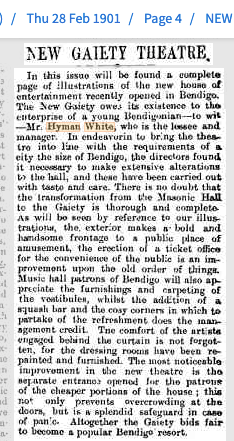
The Bendigo Independent 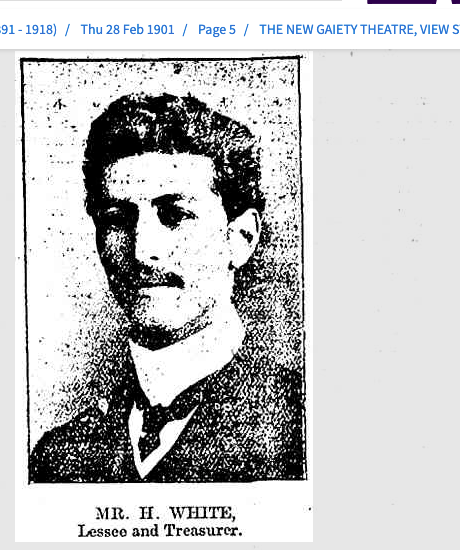
Bendigo Independent Supplement 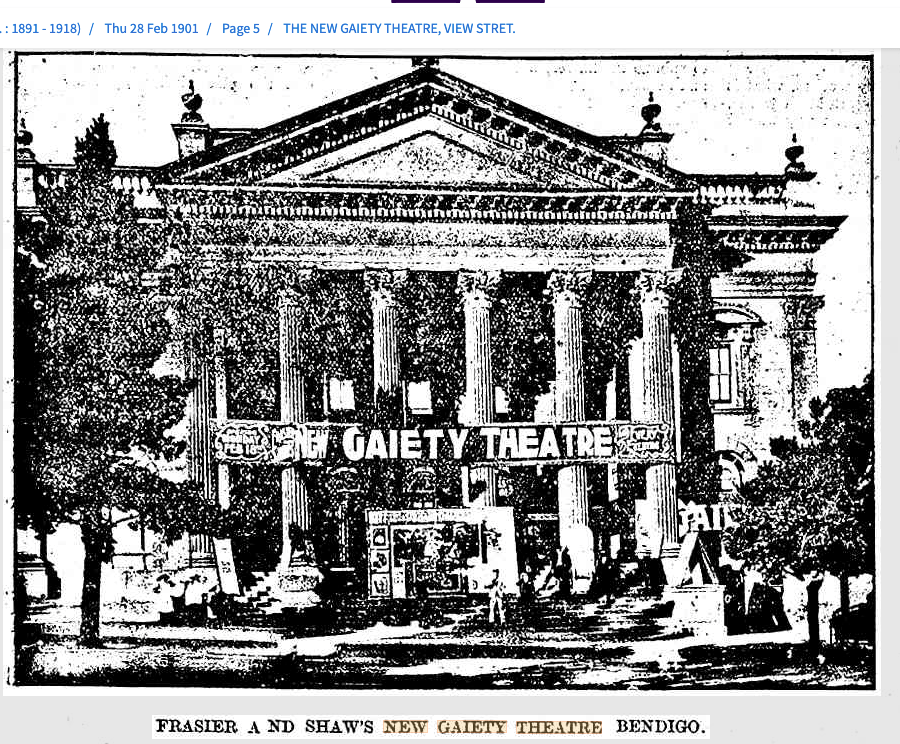
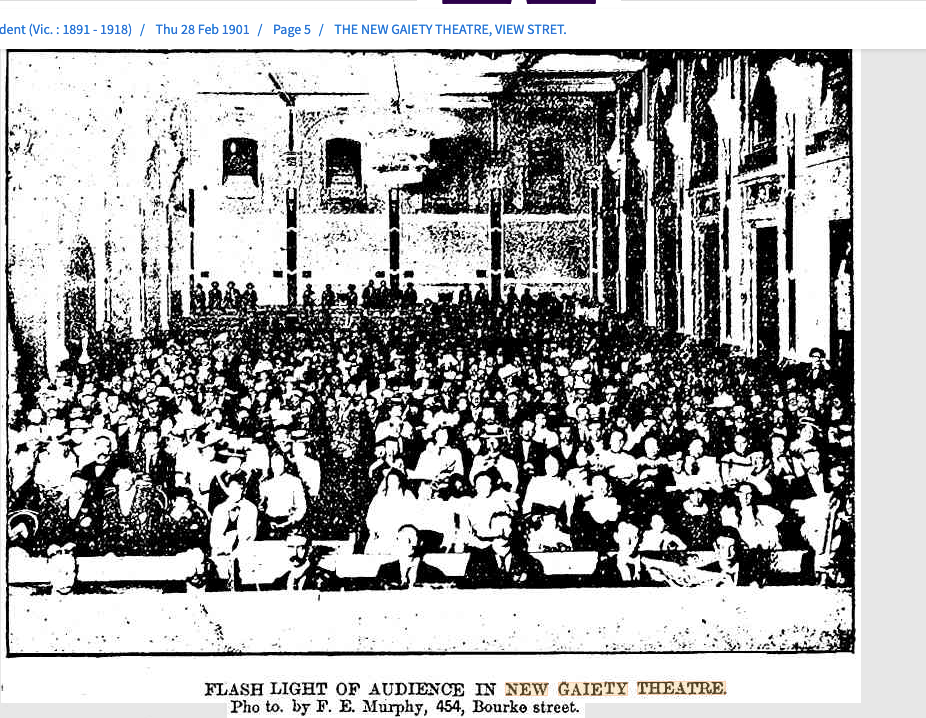
To see the extensive spread on the new theatre click here – https://trove.nla.gov.au/newspaper/article/193624154?searchTerm=New%20gaiety%20theatre -
Bert arrives in Bendigo……….
Bizarrely Bert chose to travel to Bendigo on Saturday December 30, 1899. (a fairly momentous week in the young Colony as it heralded a new century) He may been fronting for a job interview before the key people went on an extended New Year holiday ? It looks like he traveled alone, possibly leaving Harriet and Alwyn (now 4) with family in Melbourne. His arrival in Bendigo was not without incident.
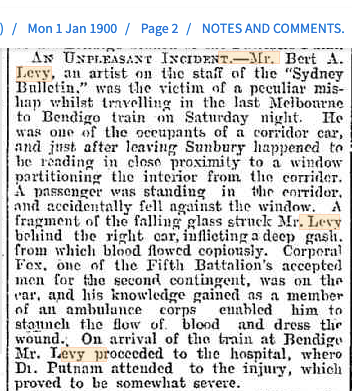
Bendigo Advertiser report on New Years day. 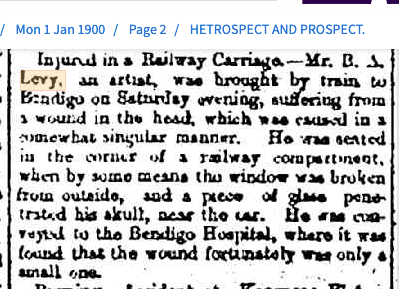
Rival newspaper, the Bendigo Independent considered the consequences of the accident somewhat differently. 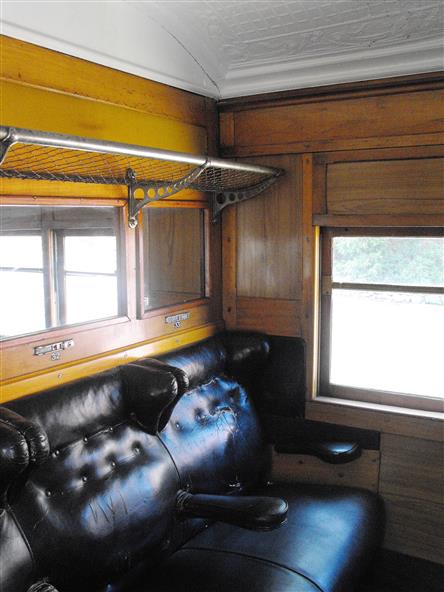
Photo from the Newport historic train museum collection. May be the wrong era of carriage but we have all travelled in something like this over the years. A couple of weeks later the news got back to Sydney, with a slight variation on where the incident took place. Not sure the train to Bendigo from Melbourne went through Albury. !! You can never trust Sydney media!
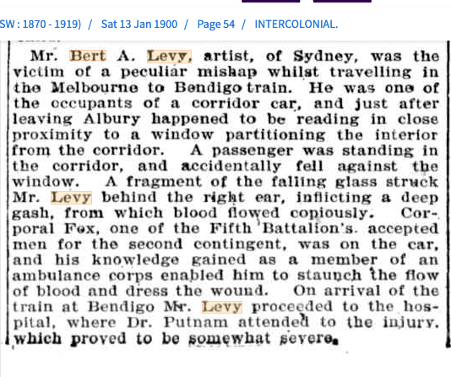
Town and Country Newspaper, Sydney. Who was the man who possibly saved Bert’s life or at the least, dressed his wound. Kangaroo Flat lad, Corporal Peter Fox. He was actually James Peter Fox.
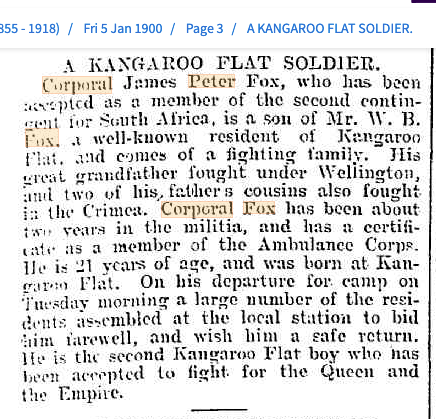
Bendigo Advertiser 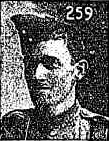
Here he is, before he sailed for his second stint in Boer War in South Africa with the 2nd Victorian Mounted Rifles in February 1902. He had already served over there for 17 months and was on leave, returning to Bendigo when he attended Bert’s wound. Being a saddler may have also aided some good stitching work if required on Bert’s wound. 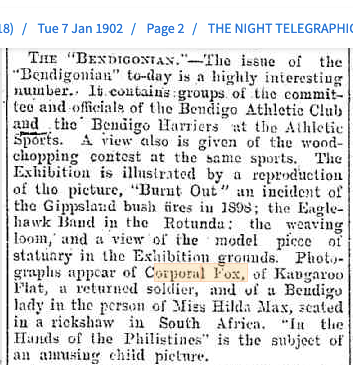
Small world. Bert was the editor of the ‘Bendigonian Supplement’ just prior to this. Unfortunately the Bendigonian at this time has not been digitised by Trove so photo can’t be shown, yet. -
Bio Note #16 Bert’s first stage performance 1897
This should be the final entry on Bert’s time in Sydney. In 1897 young Bert (mid twenties) was experimenting with a stage act in between his many other pursuits to make a living. Bert had appeared as a sketch artist at a number of testimonials and benefit concerts whilst in Sydney, (probably without payment) however, this time he gets possibly a chance to demonstrate his stage craft using his new projection apparatus and this possible results in ‘a paid gig’. August 1897 is 8 years before his first Vaudeville performance in New York.
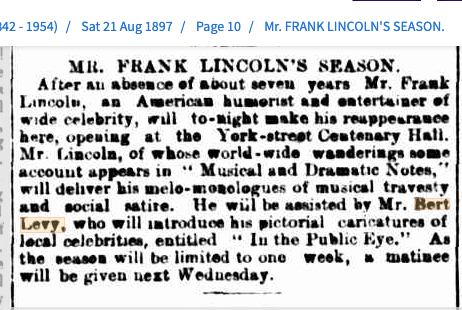
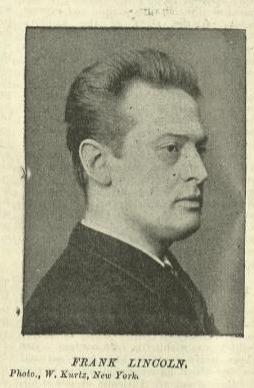
Lincoln was another interesting performer from this period…… he may have been English not American ? He died in Sydney at the age of just 36. Here is his death notice from Trove. https://trove.nla.gov.au/newspaper/article/15299492 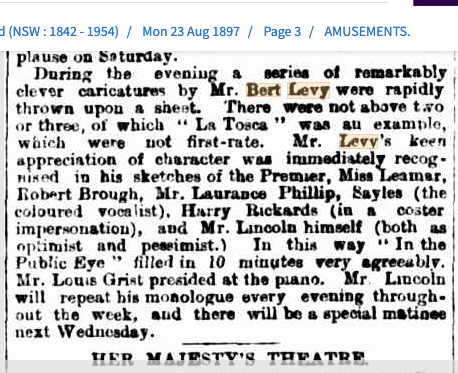
Above – The Sydney Morning Herald review of the show. Clearly evident that Bert is using some sort of projection device with the images projected on a sheet. 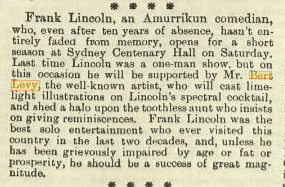
Ever irreverent, The Bulletin review describes Bert’s act ‘as casting limelight illustrations’ . Years later (15 actual years), writing his bio piece for the ‘Lone Hand’ Theatre magazine published in February 1912, Bert recounts this period when he appeared on stage during the Frank Lincoln show in August 1897.
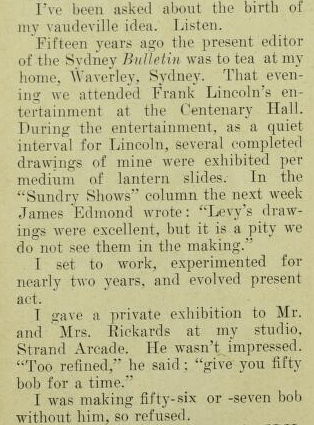
Harry Rickards was a big Australian promoter and owned the Tivoli Theatres around the country. 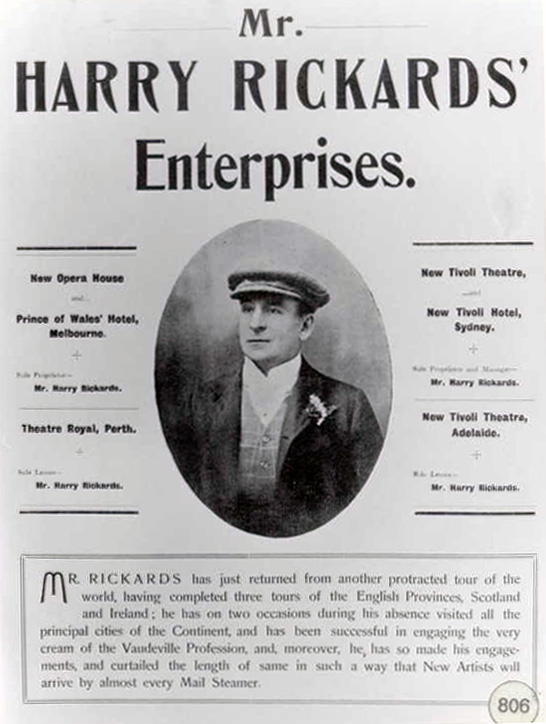
State Library of Victoria -
Bulletin work #2
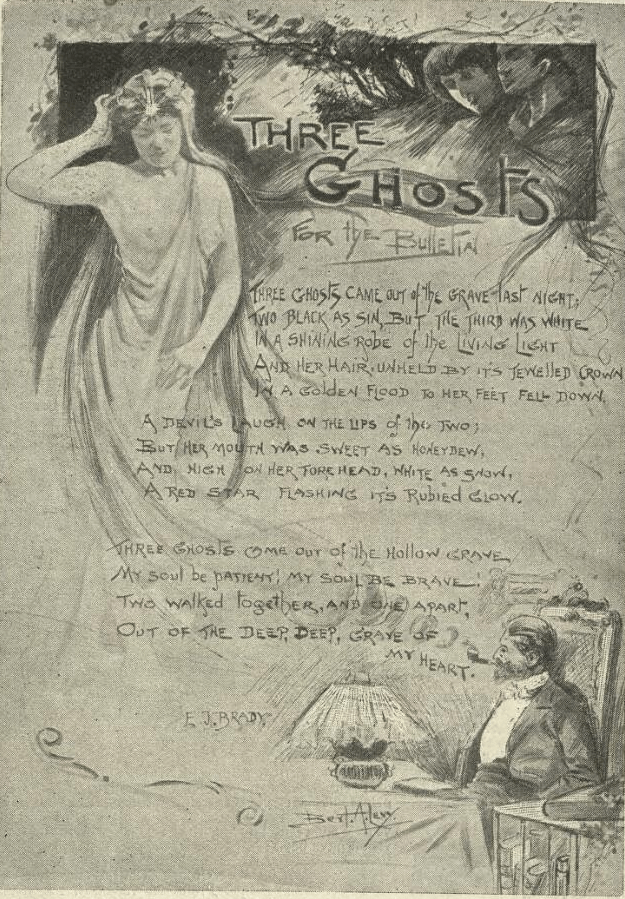
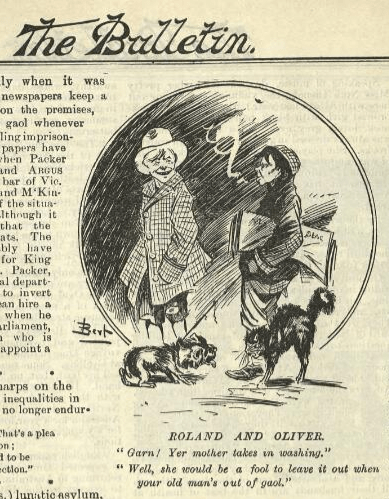
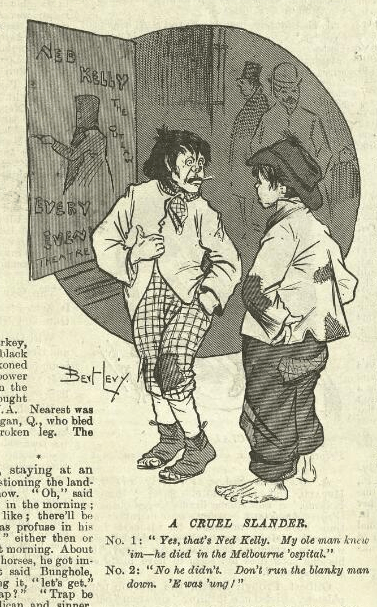
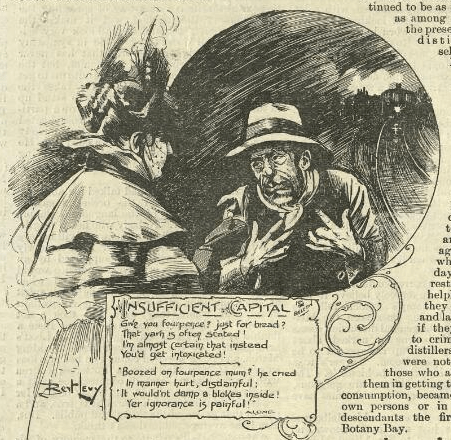
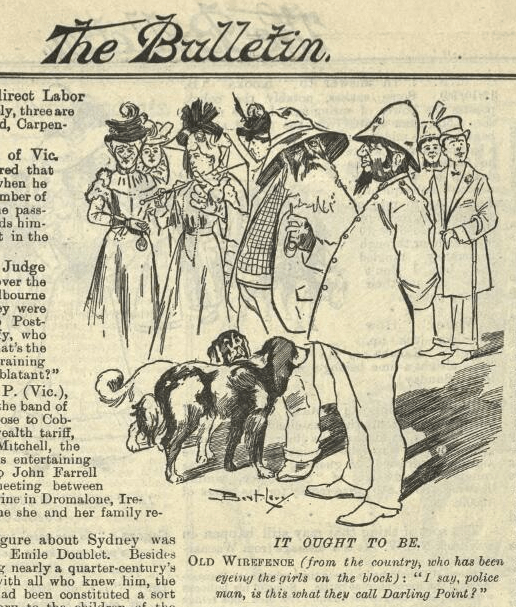
The Bulletin had its small stable of regular cartoonists and many more like Bert and Will Dyson who were freelancers in the 1890s…. I’d imagine they would pick up a few shillings each time they had something published. Bert would court controversy in 1899 for a number of his sketches that re-affirmed the Bulletin’s views on immigrants, and in this case, Jewish residents.
Bert addressed the issue twelve years later in 1911, when he returned to Australia describing it as ‘his lot’ to illustrate Hebrew jokes for the Bulletin.

The bulletin.Vol. 32 No. 1663 (28 Dec 1911) Here are three of the ‘Hebrew jokes’ that Bert illustrated that raised the hackles of the Melbourne journalist that Bert references above)
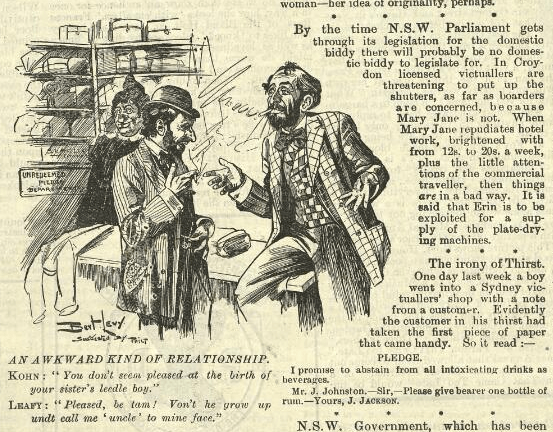


And the controversy that followed

The Hebrew Standard Sydney 1899. The same letter would appear in Table Talk newspaper in Melbourne a few days earlier written by ‘Maskel’. 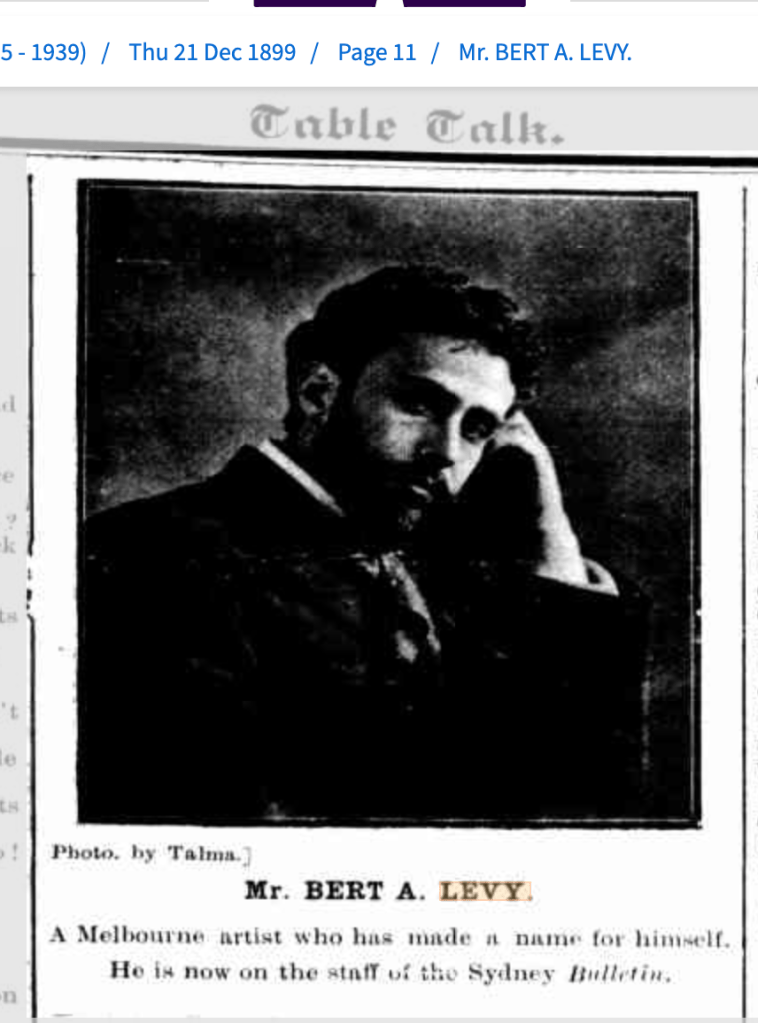
To add to Bert’s predicament and controversy, Table Talk published Bert’s photo a couple of weeks later in December 1899. No doubt, Bert would be feeling the heat in Sydney as the 19th century drew to a close. -
Bulletin work #1
When in Sydney, Bert was in his mid twenties and juggling income from the odd theatre work, costume design and managing the Photography studio in the Strand. He was most likely struggling financially. He got a break in 1897 as a free-lance cartoonist contributing ‘letter press’ to the nation’s notoriously satirical magazine, the Sydney Bulletin. At the time, the Bulletin was a proponent of the White Australia policy, and disparaging in its depictions of anyone who didn’t fit that profile. Caricatures of Jewish, Indigenous and Asian individuals were generally unflattering, affirming the stereotypical views of many Bulletin journos and editors.
Below and in the next post are a cross section of Bert’s work he had published in 1898 & 1899.
The bulletin., v.19, no.967, 1898-08-27, p.20
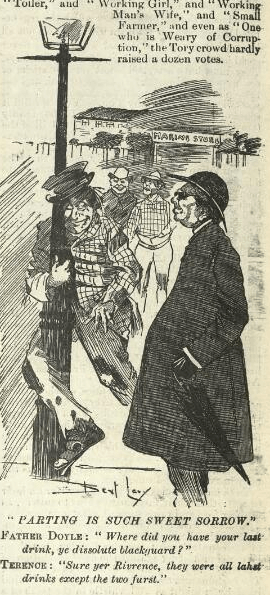
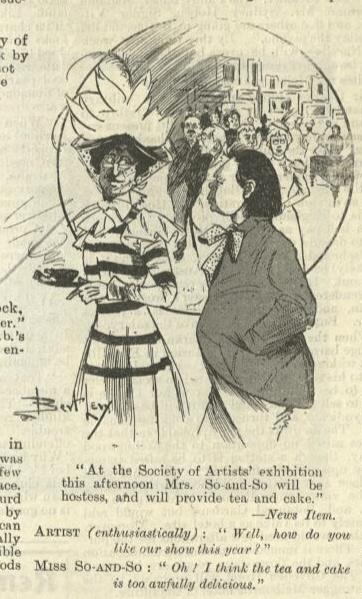
Bert’s commercial work also earned him income
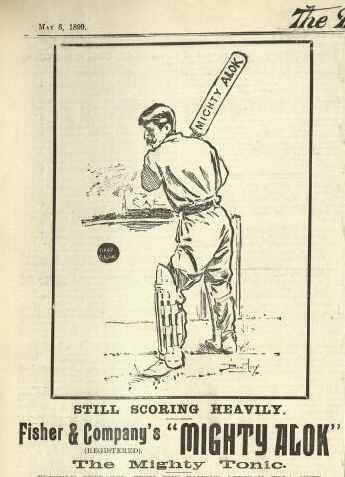
Below combining his sketch work with photography. 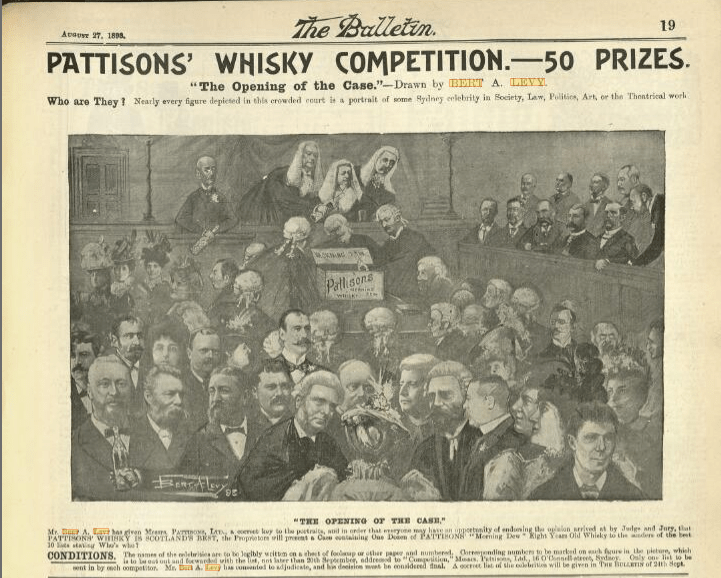
In this Pattison’s Whisky competition, Bert combined his sketch artist ability with photographic skills. Possibly a first for the Bulletin. By the way, if you want to know who the Sydney celebs were in this court case in 1898 – below is the winning answers
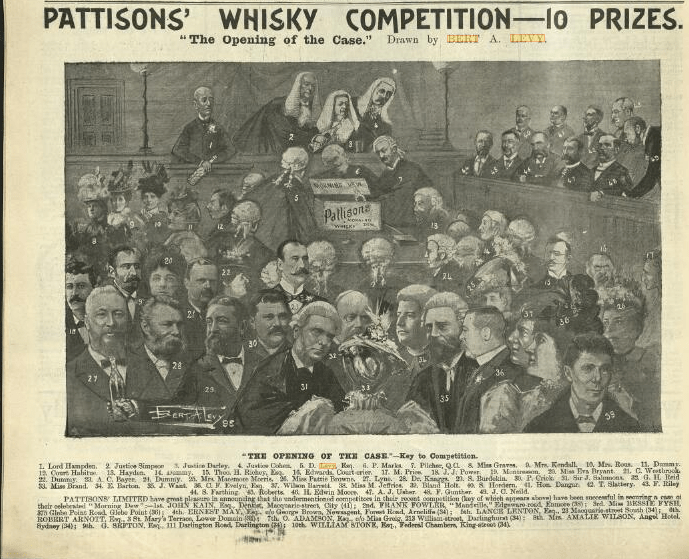
-
The friends you meet when sailing…
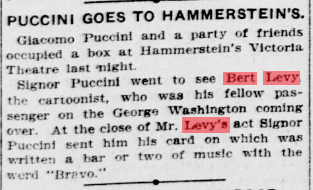
New York Tribune December 15, 1910. Just how did the Bert Levy befriend so many famous people across the globe ? Read on to find out …. Returning from his second European tour Bert sailed back to New York from London in November 1910. The ship was the SS George Washington built in Germany in 1908. The Ship was built for luxury as you can see from the First Class Lounge photo in the right image.
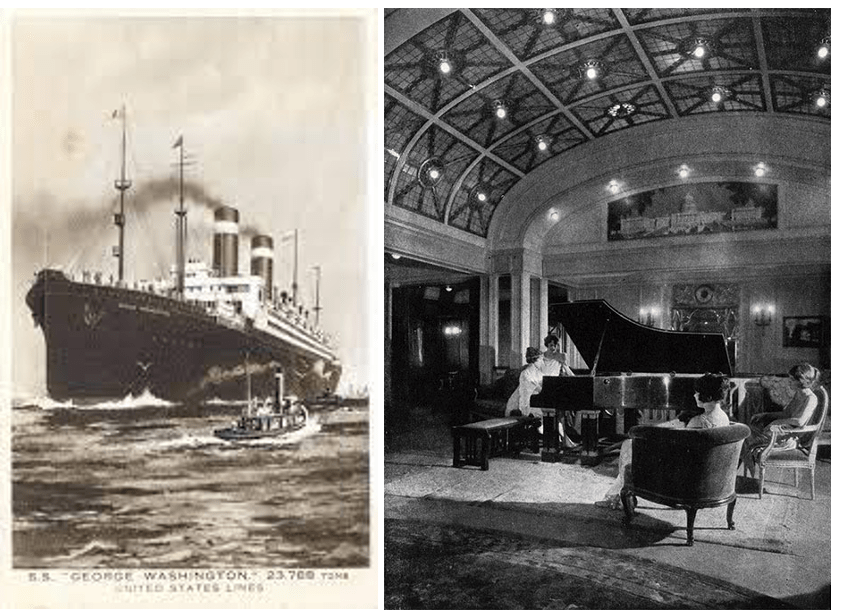
As an aside- Wikipedia states, on a return journey on 14 April 1912, the George Washington passed a particularly large iceberg south of the Grand Banks of Newfoundland and radioed a warning to all ships in the area- as they say, ‘the rest is history’!! In his 1921 book, Bert dedicated a chapter titled ‘With Genius on the High Seas’ detailing his experiences with two internationally acclaimed sailing companions. The first featured here was…..

Giacomo Puccini was making this trip to the United States to oversee the debut of his latest opera, La fanciulla del West, The Girl of the Golden West’. The great composer is known for his more popular works of ‘La Boheme’ and ‘Madam Butterfly’.
Now, Puccini wasn’t just some international celeb disappearing into his Royal cabin behind protective handlers. Bert’s depiction of the composer paints quite a different picture of the man and is well worth the read. (here are my iphone photographs of the pages from Bert’s book on Puccini)
Extract from Bert’s 1921 Book – For the Good of the Race and other Stories.
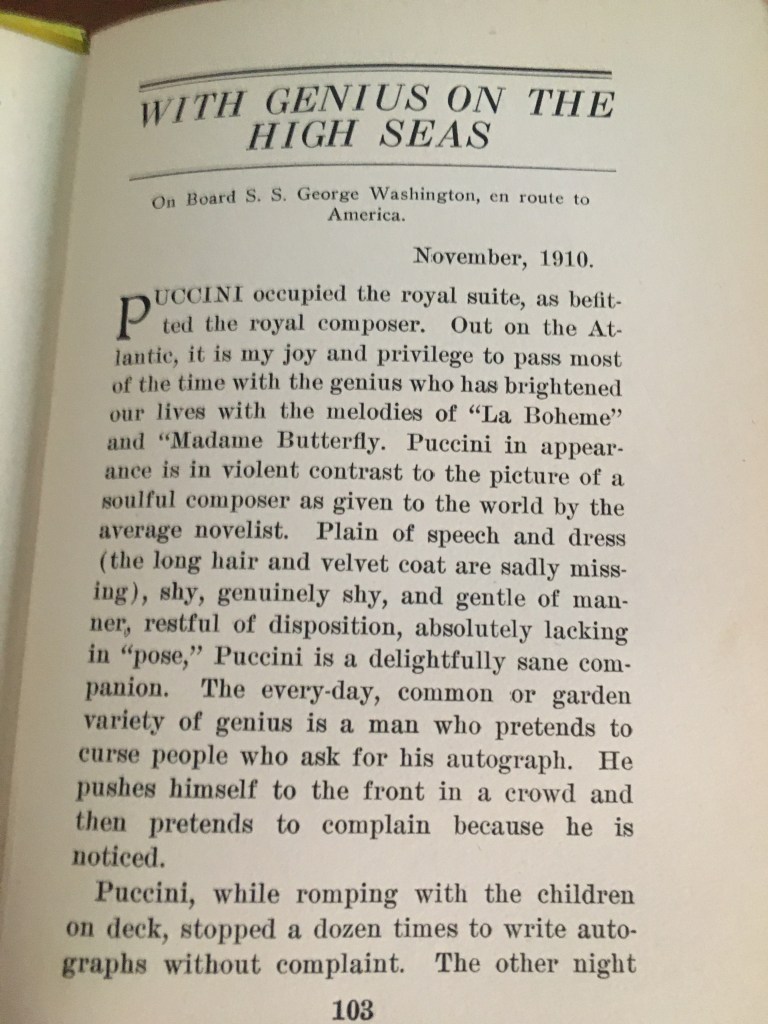


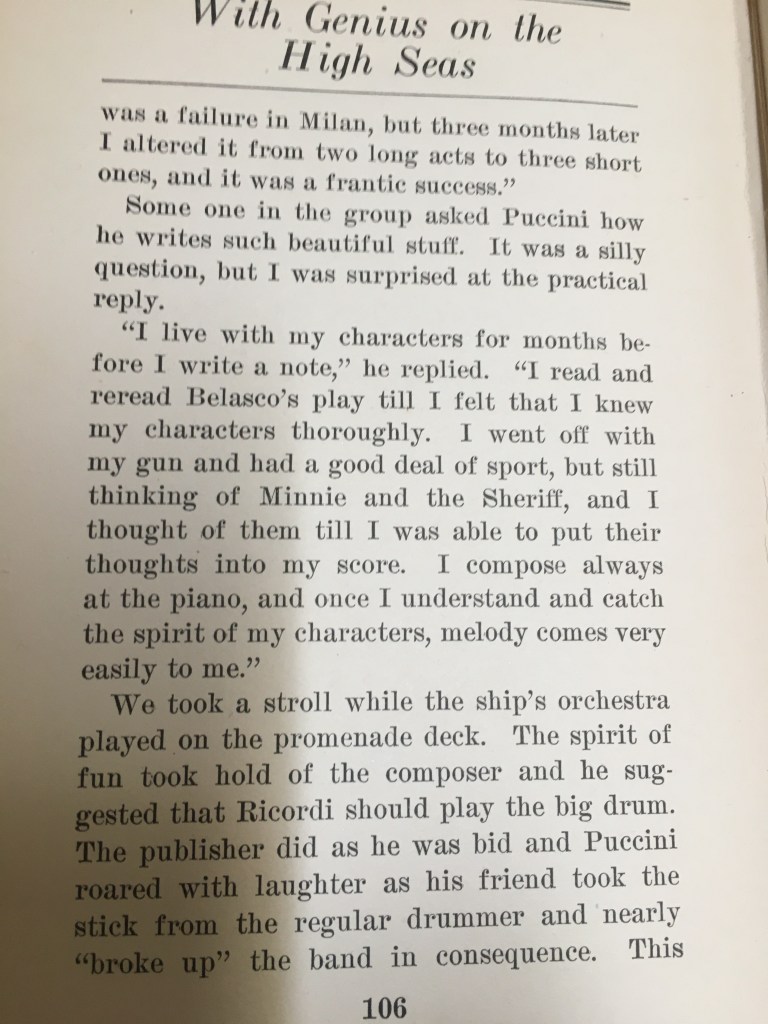

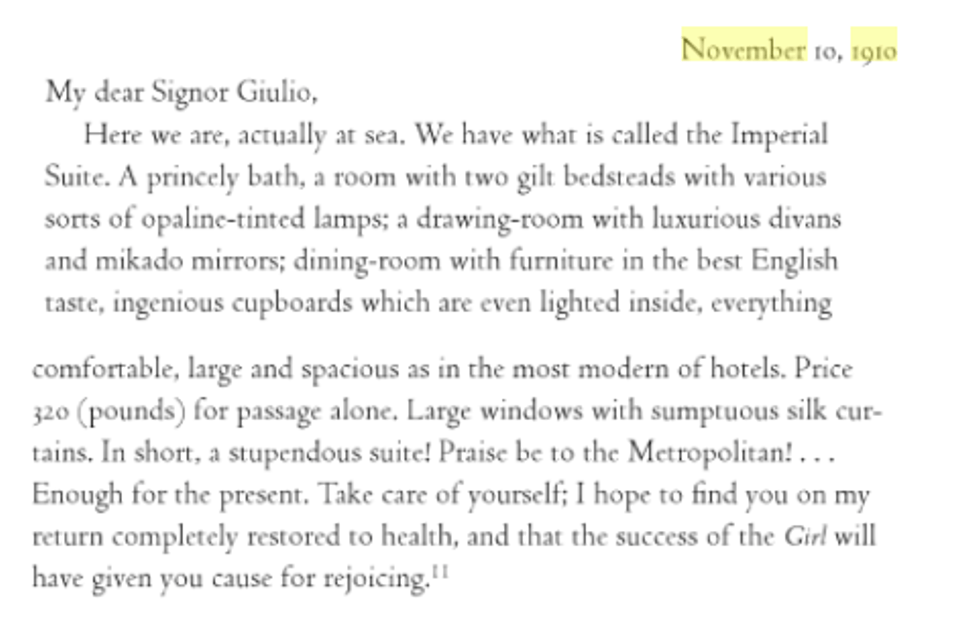
Extract from Bert Levy’s book, ‘For the Good of the Race and other stories’. (Copy on loan from Phil Lipshut) Finally, I found this. Puccini writing a letter to his friend and colleague at The Milan Record company whilst on board the SS George Washington. Kind of supports Bert’s description of the great man.

UNITED STATES -: Scene from the premiere of La Fanciulla del West (The Girl of the Golden West), opera by Giacomo Puccini (1858-1924) performed at New York in 1910, with Enrico Caruso as Johnson. Milan, Museo Teatrale (Scala) (Photo by DeAgostini/Getty Images) -
Bio note # 14 ‘Brother of the brush’
During his time in Sydney, Bert joined the Mosman Artist camp on weekends forging friendships with Australia’s future art elite including Streeton, Roberts, Longstaff and McCubbin and referred to his membership of the group, as being a ‘a brother of the brush’. His association with the camp is buried in one of his Music and Dramatic columns in the Bendigo Advertiser on Wednesday September 19, 1900.
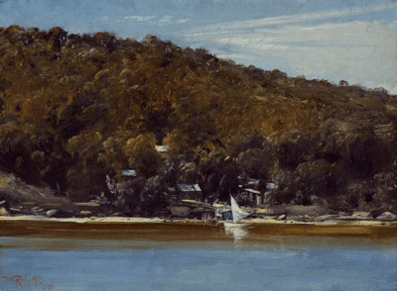
Tom Roberts, The camp, Sirius Cove, 1899. Currently in the collection of the Art Gallery of New South Wales. 
Arthur Streeton at work at Curlew camp. State Library of NSW Bert’s Music & Dramatic Column in the Bendigo Advertiser – (the quality of the Trove piece is ok but I have transcribed it to make the description easier to read) More on the intriguing and scandalising Professor Marshall Hall in another blog!
https://trove.nla.gov.au/newspaper/article/89618332?searchTerm=Bert%20Levy
Bert continues ……..’Professor Marshall-Hall may have been indiscreet in publishing the poems that have brought about him much trouble. At the same time many people have formed an erroneous opinion of the much-abused musician by following the course of the controversy in the Melbourne dailies. I don’t know anything about the Professor’s poetry; I only want to tell my readers something about the man as I have had the pleasure of knowing him. On Sydney Harbor, at that beautiful little bay called Mossman’s, there is an artist’s camp. Every ‘brother of the brush’ in Victoria and New South Wales, more or less, knows of Reub Brasch’s camp, that dear, delightful Bohemian spot, where every member of the craft receives a glorious welcome. Many tender memories crowd upon me as I remember the jolly days I have spent at the camp. Memories-of Arthur Streeton, Tom Roberts, John Longstaff, Fred M’Cubbin, and Marshall-Hall. After a hard day’s work in the city, what a pleasure it was to catch the Mossman’s Bay boat at the Circular Quay, and to get away from the madding crowd. On the little golden headland across the harbor’s indescribable blue, we used to loaf, paint, and talk. The camp was maintained by monthly subscriptions from all the “boys” who used it, and we kept a man-cook and boy on the spot all the year round. There were two large tents, and the kitchen was in a hollowed out and massive old rock. At night we used to sit round a camp fire and tell yarns. How beautiful the environment. Across the black water we could see the dancing lights of Circular Quay, and occasionally the huge Manly boats passed through the darkness like some great angry monsters. Sometimes on a bright moonlit night dozens of rowing boats would be out, and across the water would come to us shouts of merry laughter, and perhaps the sound of a rollicking chorus, accompanied by an accordion. Oystering parties would land on the rocks beneath us, and for hours we would hear the chip, chip of the knives knocking the shell fish from the rocks, where they abounded. ‘
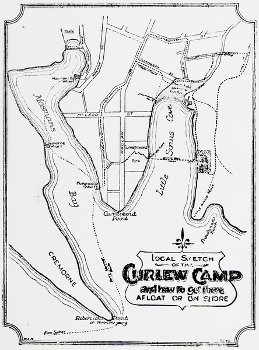
Sketched map of Curlew Camp and surrounds, undated. Source: Mosman Library Local Studies 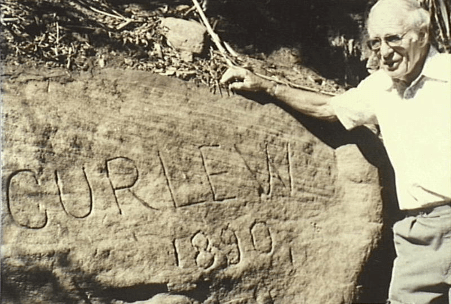
Curlew Camp 1890 carving. The below description of the Artist’s camp is lifted from a Dutch travel site that combines art with travel…. quite an interesting site if you are interested in both… https://izi.travel/en/about-us
‘This is the site of the original Curlew Camp. The camp was established by Reuben Brasch; a clothing manufacturer who moved to Sydney from Melbourne in 1875. Brasch’s store was located on a city corner on Oxford Street opposite Hyde Park and soon became known as ‘Brasch’s corner’. Reuben and his family would frequent this place for holidays, rowing across from Parsley Bay, Vaucluse, eventually establishing a permanent camp here. Reuben became known as the ‘father’ of the camp and this title was then passed down to his sons as he aged.
During the camp’s operation, original features included the large canvas tents that the artists resided in. Other features of the site included the dining hut, a billiards tent, and well-kept gardens. With these features accompanying this incredible outlook, it is no wonder they chose the ‘tent-dwelling’ life over that of the bourgoise.
Although many of the original features are no longer standing, there are still markers of this significant artists’ camp including the coral tree which was planted by Arthur Streeton during the 1890s to mark the location of the camp. Visitors commonly utilised the tram or the ferry to Mosman Wharf at the headland between Mosman Bay and Little Sirius Cove. To then come across to Curlew Camp, they needed to walk east over and down to the adequately named ‘Cooee Point’, located directly across the cove to the camp. At this point, visitors were required to ‘cooee’ across the water to notify members of the camp they required a boat ride across. This is where the coral tree marker had its use. Cooee across the water and see if anyone cooee’s back!

Rodney.Cherry Collection of Photographs 
R.Cherry Collection. Playing cricket at Whiting Beach near Curlew. CREDIT:LOCAL STUDIES COLLECTION, MOSMAN COUNCIL 

Postscript – After 1900 most of the artists moved on and the camp became popular with those interested in outdoor life and water sports. In 1912 the camp closed for good, with Taronga Park Zoo soon after moving to the ridge above the site.

Reuben Brasch, Oxford St, Darlinghurst c1914 Three-storey highly ornate sandstone building with decorative parapet, in the centre of which is the inscription ‘From Maker to Wearer’ and ‘Established 1881’. And yes, among many other things, the Brasch family descendents did establish the Brash’s store, where you bought your first vinyl record.
https://www.daao.org.au/bio/barbara-nancy-brash/biography/
Bert’s donation of an Arthur Streeton painting, titled Manly Beach to the Bendigo Art Gallery in 1900 will be dealt with in a later blog post.
-
Bert takes Paris 1909, however gets lost in translation !!
Bert’s non-speaking act which featured him whistling on stage as he magnified his images on a screen behind provided an entrée into European theatre that was generally not offered to other English-speaking performers. Bert was able to write French and German words on his glass disk as he drew his famous characters.
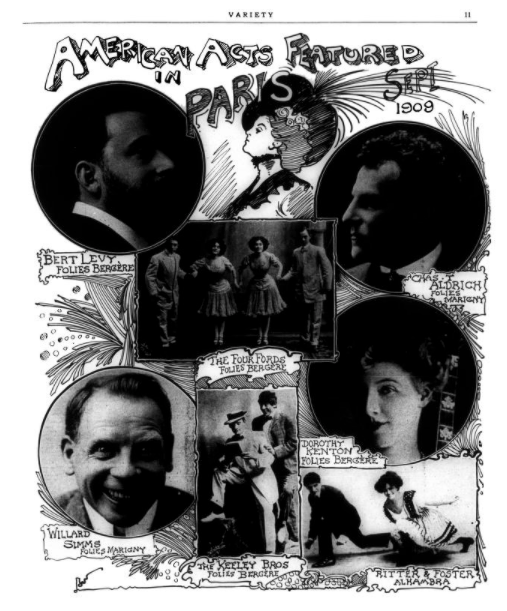
Variety Magazine (USA) 1909 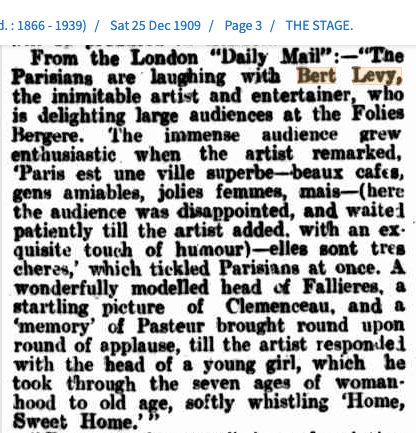
Now, I know some of you are semi fluent in the French language but the above exchange was explained a couple of years later in a 1911 article in Melbourne’s ‘Table Talk’ newspaper. As can sometimes happen, the Trove digitisation process gets stuck in the crease of the page but I think I’ve worked out most of this amusing story…..
Here is the link if you’d like to see the original article…
https://trove.nla.gov.au/newspaper/article/146572467/17443497
Context, Bert was back in Australia in 1911 performing and giving the odd interview….the Table Talk reporter continues…….
‘Mr. Bert Levy has a fund of amusing stories to tell of his experiences. Some of the funniest are connected with little contretemps when he has been performing in German or French. Although he knows the language well enough for the purpose, he is not so familiar with the idioms and colloquial expressions.
At times he has had rather funny experiences. He caused dire displeasure in Paris on one occasion when he intended to be most complimentary. He wrote a series of remarks upon his glass in the course of turn, all saying nice things, and described the girls as so beautiful, so graceful and charming and, he meant to finish with ‘so dear’, but unfortunately, the phrase used meant first vernacular, “so expensive.” The papers were to account very hotly for insulting Parisian girls, and there was quite a storm’.
By the way, it is a pity the word ‘contretemps’ has sadly disappeared from use….. we should use that word more often, ‘make a note of that, Darling’ …….. (apologies- old Blackadder line)
I know many of you are familiar with the Parisian Theatre scene but just in case you were wondering where you have heard of Folies-Bergere before.
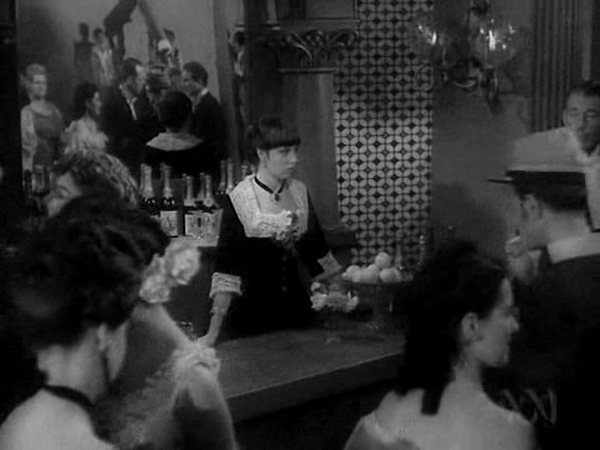
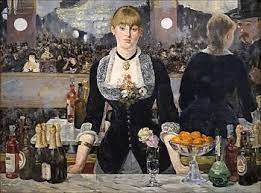
Un bar aux Folies Bergère is a painting by Édouard Manet, considered to be his last major work. It was painted in 1882 and exhibited at the Paris Salon. -
Bio note # 13. ‘The King of China’
A recent search found this photo of Bert where he appears to be in his bridegroom outfit. If it is, he is 24 years of age and the photo is from 1895. This, and the next photo show Bert was experimenting with photographic presentation long before he took over the Alba Studio in Sydney.

The photo along 7 others can be accessed from the prestigious New York Public Library Digital Collection in the BILLY ROSE THEATRE COLLECTION . Click on the above link and type Bert Levy in the search area. Now why the above title ? The next image obviously removed from a photo frame, shows Bert with his best man.

Levy Family member, Phil Lipsuch believes the unidentified person (right) is Bert’s younger brother Reuben (age 20 here). Reuben is another fascinating member of the Levy family. Born 1975, he was four years younger than Bert and became very well known in Sydney business circles.
READ THE OBITUARY OF MR REUBEN LEVY https://trove.nla.gov.au/newspaper/article/16250869Reuben died quite young in 1926 when he was just 50 years of age and according to Sydney newspapers had just returned from a world tour including the USA. They also inform he left a considerable estate for the time.
https://trove.nla.gov.au/newspaper/article/224057249?searchTerm=Reuben%20Levy
However, Reuben should best be remembered for his groundbreaking promotions of his glassware and his business. He was well ahead of his time, calling on customers through election speeches and stories etc. (see below) Have a good look at the advertising image below- He’s slashing high prices and his profits…

The following comes from a USA web site dedicated to ‘Carnival Glass Worldwide’ and dedicates two pages to Reuben’s business in George Street, Sydney.
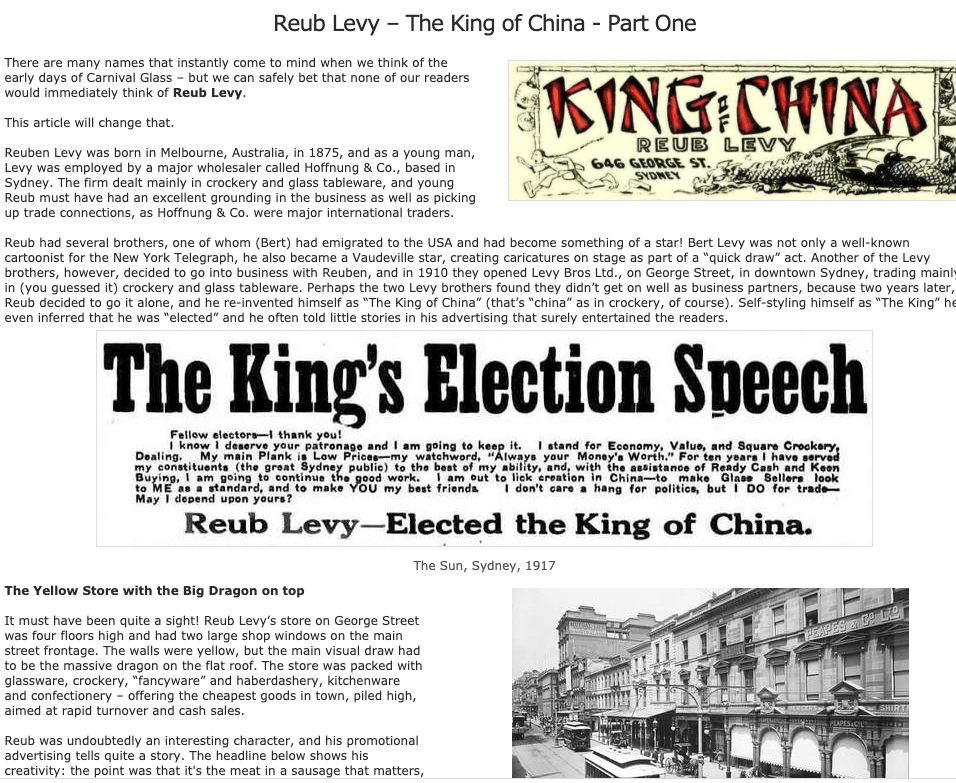
The link below takes you to the two web pages on Reuben Levy’s business in the wonderfully eclectic ‘Carnival Glass Worldwide’ website….I’m sure you have some, somewhere !
-
Subscribe
Subscribed
Have a WordPress.com account? Log in now.

